
When Can You Stop Responding to a DSAR? Managing Endless Data Subject Correspondence
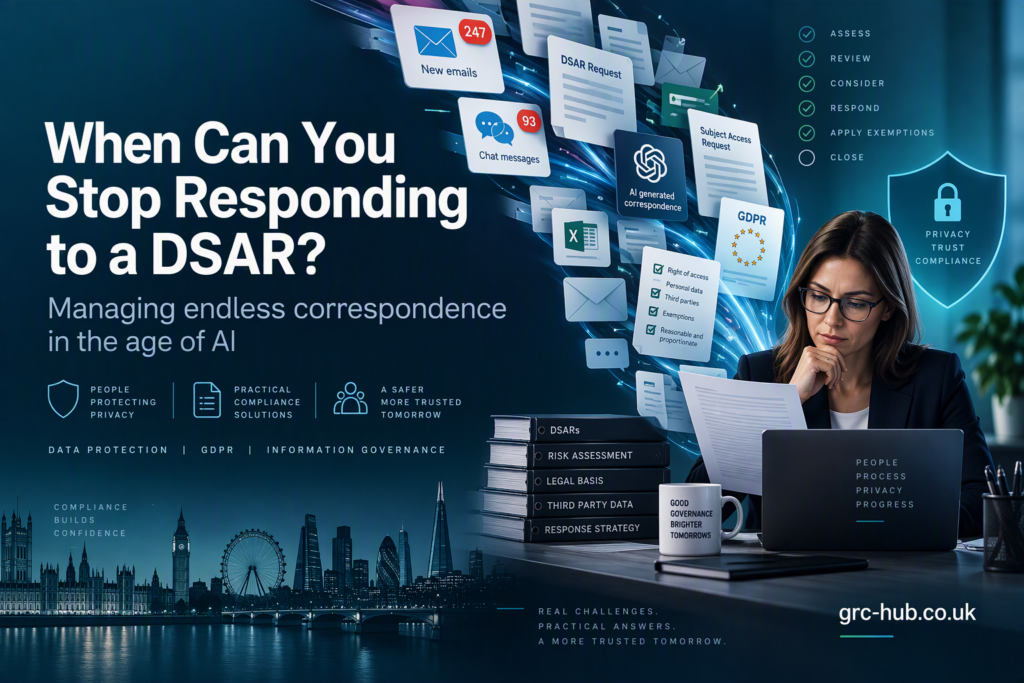
Data Subject Access Requests don’t always end with the final response. As AI makes it easier to generate lengthy follow-up questions and challenges, many organisations are finding themselves trapped in cycles of never-ending correspondence. This article explores when controllers can legitimately bring DSAR discussions to a close, what the ICO says about excessive requests, and how to remain compliant while managing disproportionate demands on resources.
AI-Generated DSARs: Is Your Organisation Ready?
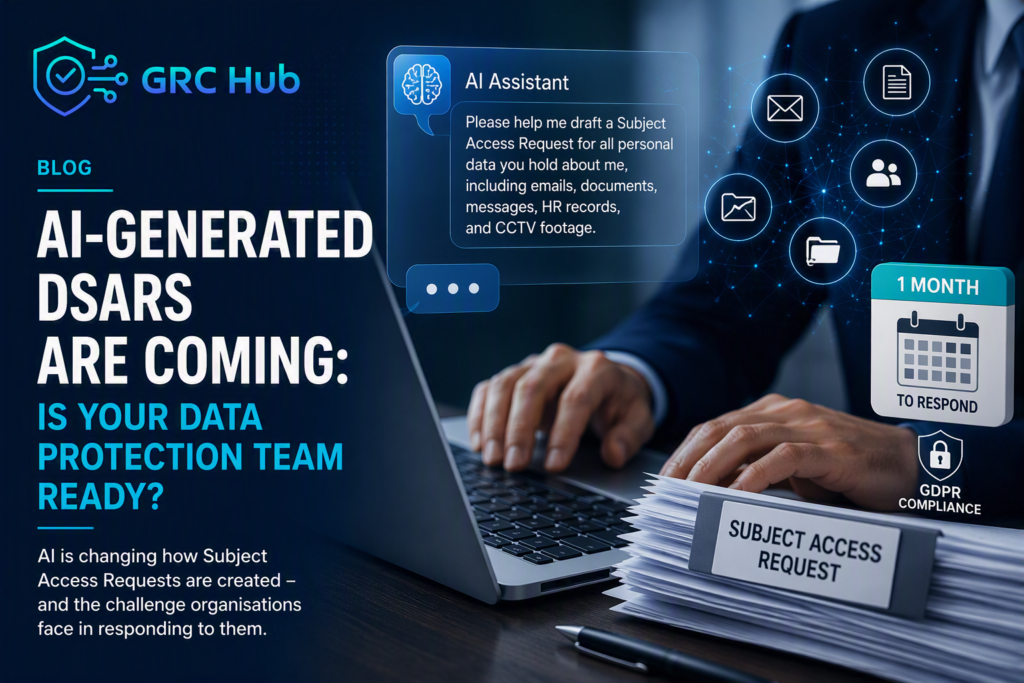
AI is changing the DSAR landscape. With increasingly sophisticated requests becoming easier to generate, is your organisation equipped to respond effectively, proportionately and on time?
Google Workspace DSAR Support | Subject Access Request Services
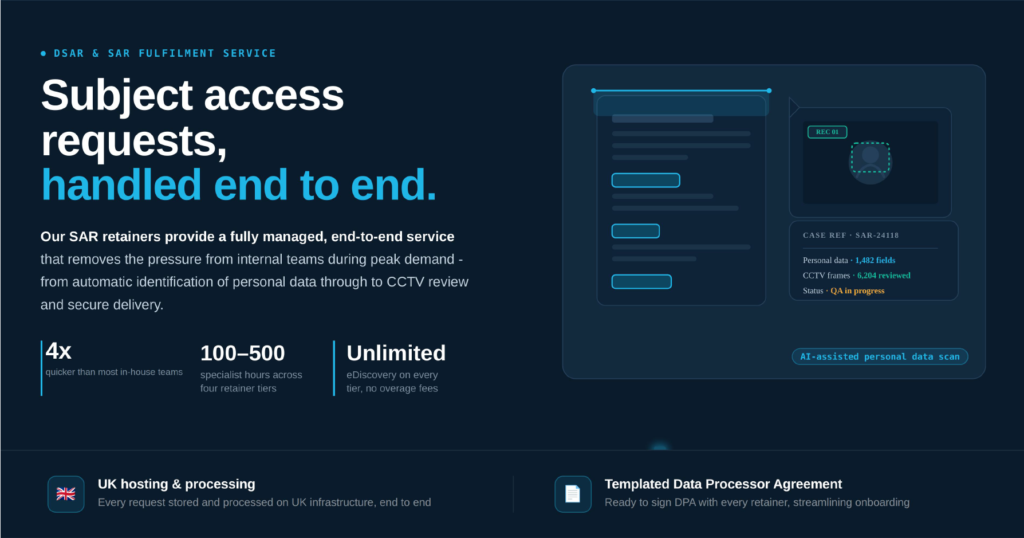
GRC Hub provides Google Workspace DSAR support, helping organisations identify, collect and review personal data across Gmail, Google Drive, Chat and other Google Workspace services.
DSAR Intake Forms: Managing DSRs and Data Subject Requests
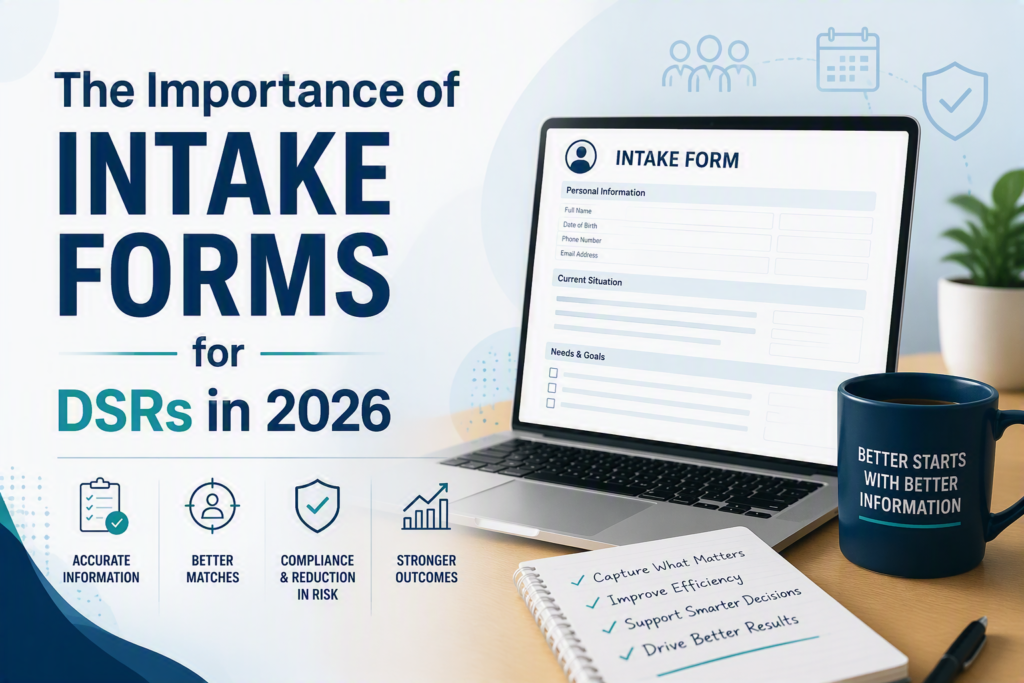
Learn how DSAR intake forms can support DSR management, improve request scoping and help organisations conduct more targeted searches.
CCTV & Video DSAR Redaction Services | Face Blurring & Video Disclosure Support | GRC Hub
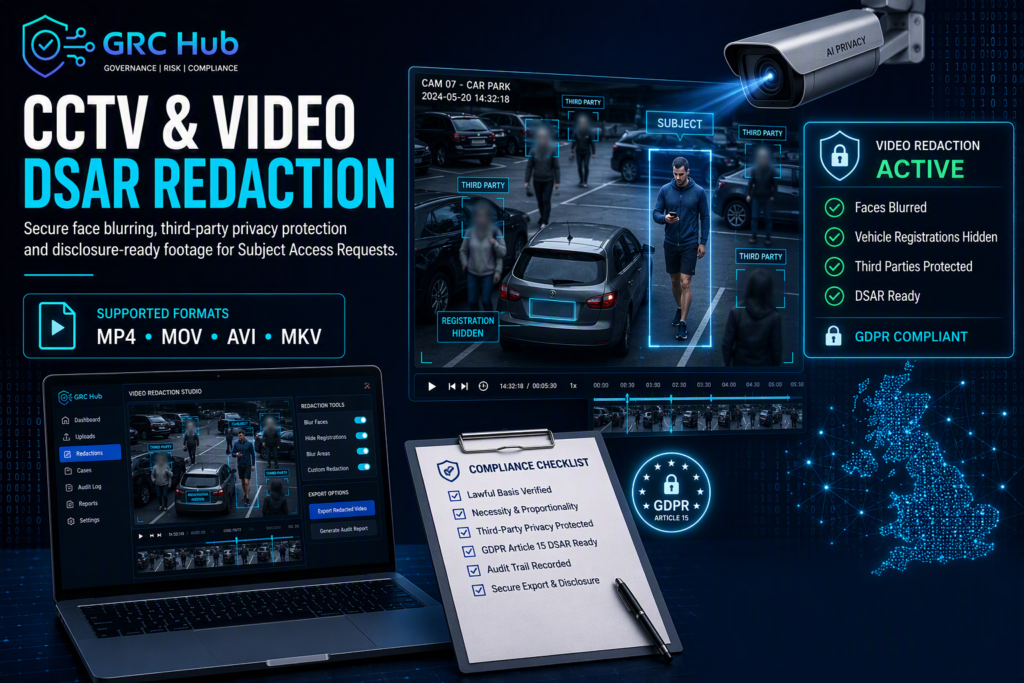
GRC Hub now offers specialist CCTV and Video DSAR Redaction Services, helping organisations securely prepare footage for disclosure while protecting third-party privacy. Our service supports all major video formats, including MP4, MOV, AVI and MKV, with professional face blurring, vehicle registration redaction and disclosure-ready outputs for Subject Access Requests, investigations and compliance obligations.
DSAR Software vs Outsourced DSAR Services: The Hidden Costs Explained
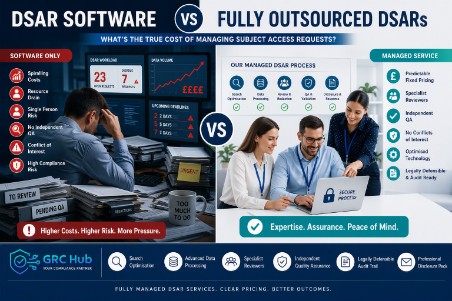
DSAR software can improve efficiency and automate workflows, but technology alone often falls short. This article explores the hidden costs of a tooling-only approach and why many organisations are choosing outsourced DSAR services for better compliance, quality and resource management.
Microsoft Subject Access Requests: How to Handle DSARs in Microsoft 365 Efficiently

Handling Subject Access Requests in Microsoft 365 is complex, with data spread across Outlook, Teams, SharePoint, and OneDrive. This guide explains how to manage DSARs efficiently, avoid common pitfalls, and reduce workload using proven processes and specialist support.
UCS College Group: DSAR Training Case Study

UCS College Group partnered with GRC Hub to enhance its Subject Access Request (SAR) capability through practical training and eDiscovery optimisation. The programme improved search accuracy, reduced processing time, and introduced a consistent, scalable SAR framework aligned with regulatory expectations.
How to Respond to a Subject Access Request Without Disclosing Too Much (or Too Little)
A practical guide to DSAR support, helping organisations respond lawfully without over‑disclosing or withholding personal data.
DSARs in Local Authorities: Rising Demand and the Unitary Challenge
DSARs are no longer a background compliance task for local authorities. For unitary councils in particular, rising volumes, complex social care records and limited capacity are creating real operational strain.