
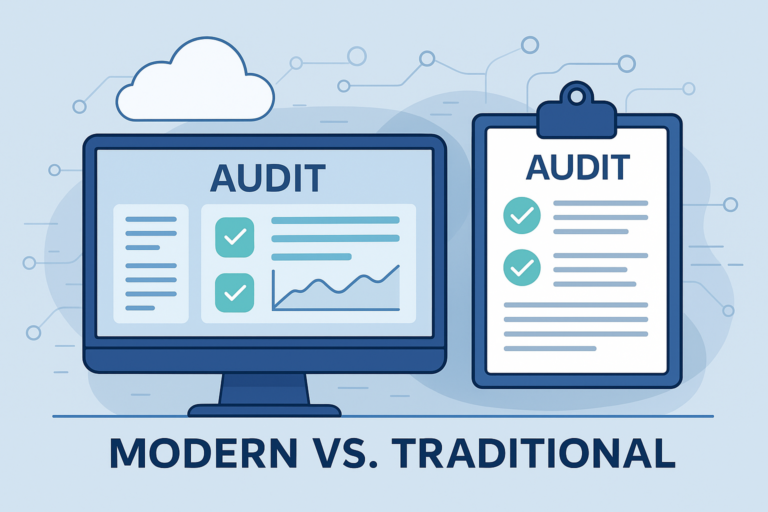
Introduction
The world of data protection has transformed dramatically ov
er the past decade. Most organisations have shifted from on‑premise systems to cloud‑first environments, with a growing mix of SaaS tools, workplace apps, outsourced processors and distributed teams. As a result, the way businesses achieve assu
rance and the type of audit they need has fundamentally changed.
Yet many organisations are still approaching audits as if the world hasn’t moved on.
In client meetings, we often hear references to the “traditional audit” a process defined by heav
y upfront preparation, document scrambles, and last‑minute panic in the weeks leading up to an auditor visit.
If this sounds familiar, you’re not alone.
The Problem with the Traditional Data Protection Audit
The traditional audit model was built for a different era:
- on‑site servers
- paper files
- linear processes
- predictable boundaries of responsibility
Back then, an auditor visiting your office for two days with a clipboard made sense.
Today, it’s more like using a road roller to fix a pothole.
We sometimes describe the traditional audit with a simple analogy:
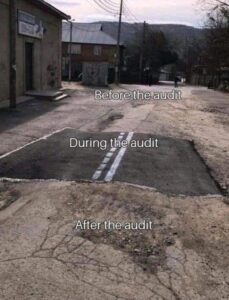
This is exactly how a traditional data protection audit can feel:
intense preparation → artificial order → temporary compliance.
The problem is, this approach tells you very little about…
- how your organisation operates the other 11 months
- how effective your controls are in real time
- how your cloud systems and vendors behave day‑to‑day
- whether your privacy governance model is actually working
And with regulatory expectations rising, this mode of assurance is becoming increasingly outdated.
The Rise of Modern, Cloud‑Ready Data Protection Audits
Technology has advanced and so have expectations.
Organisations now operate across dozens (sometimes hundreds) of systems:
HR platforms, CRM tools, cloud storage, workflow apps, communication tools, automated decision‑making systems and external processors.
A modern data protection audit therefore needs to reflect:
- how data actually flows
- where risks really sit
- how effectively controls are monitored
- whether governance is live, not theoretical
- how quickly issues are identified and resolved
Rather than reviewing a moment in time, modern audits offer continuous assurance, giving organisations confidence that their compliance posture is maintained year‑round not just “made to look good” before an auditor arrives.
Does the Traditional Audit Still Have a Place?
Absolutely.
Not every business has fully modernised its environment. Some still have:
- heavy on‑site operations
- physical archives
- critical legacy systems
- environments where a site visit is essential
- safety‑critical or regulated environments that require in‑person verification
For these organisations, traditional audits remain an important part of the GRC landscape.
But even here, the most effective approach blends traditional audits with modern, tech‑driven assessments.
Why Are You Seeking Assurance? (This Is the Key Question)
Before choosing the type of audit, you should be clear on the purpose:
- Are you preparing for external certification?
- Are you demonstrating compliance to the board?
- Are you satisfying a regulatory obligation?
- Are you responding to client due diligence?
- Are you assessing your readiness for the DUAA 2025 changes?
- Are you trying to understand your true operational risk?
Your reason determines the type of audit you need.
Sometimes you need a full traditional audit.
Sometimes you need a modern, continuous assessment.
Often, you need a combination of both.
And that’s where many organisations go wrong, they choose the audit format first, instead of the need first.
How GRC Hub Approaches Data Protection Audits
At GRC Hub, we see value in both traditional and modern audits.
Our role is to help you choose the right model based on:
- your environment
- your risks
- your systems
- your regulatory profile
- your clients
- your operational maturity
Because an audit should never be a tick‑box exercise.
It should give you genuine assurance and a clear path to continuous improvement.
We help organisations understand:
- what type of audit they actually need
- where their biggest risks sit
- how to demonstrate year‑round compliance
- how to align with modern data protection and GRC expectations
And most importantly:
how to avoid the broken‑road problem.
Which Type of Audit Is Right for Your Business?
If you’re unsure whether you need a:
- traditional on‑site data protection audit
- modern digital privacy audit
- GDPR readiness assessment
- DSAR workflow audit
- DUAA 2025 compliance review
- hybrid model
we can help you determine the right fit.
Final Thoughts
The data protection world has changed.
Cloud adoption, distributed teams, AI governance, vendor reliance and evolving legislation mean organisations can no longer rely solely on older audit models.
A modern approach isn’t just more efficient it gives you real assurance, not just a polished snapshot.
If you’re considering a data protection audit and want clarity on what approach is right for you, GRC Hub is here to help, view our Data Protection Audt Services here.